Fragments of
a moving world.
/Ark/Photography is as much about what happens before and after the shot as it is about the moment itself. These are the stories from the field — the journeys, the waiting, the light, and the choices that made each frame possible. Some of them are below.

The Man Who Fed the Desert
It was five in the morning when the bus left Marrakech. Nobody spoke much — we were twenty-something people from different countries, colleagues for the week, strangers in every other sense. The kind of group that forms around a shared destination and dissolves just as easily. By the time we reached the Agafay Desert, the sun had just started its work. And there, in the middle of nothing — no road signs, no buildings, no reason — someone had erected a tent the size of a concert hall. Tables dressed in white. Coffee already brewing. A welcome that made no geographical sense and yet felt, somehow, completely earned. He was one of the first people I noticed. Moving through the crowd with quiet authority, a plate balanced in each hand, navigating the space as if he had always known it. There was something in his posture — not pride exactly, but a kind of ease that comes from knowing your role and owning it completely. I raised the camera. He never looked up. The desert stretched behind him in every direction, vast and unbothered. Some photographs are hunted. This one simply appeared.
Where Silence Has a Wingspan
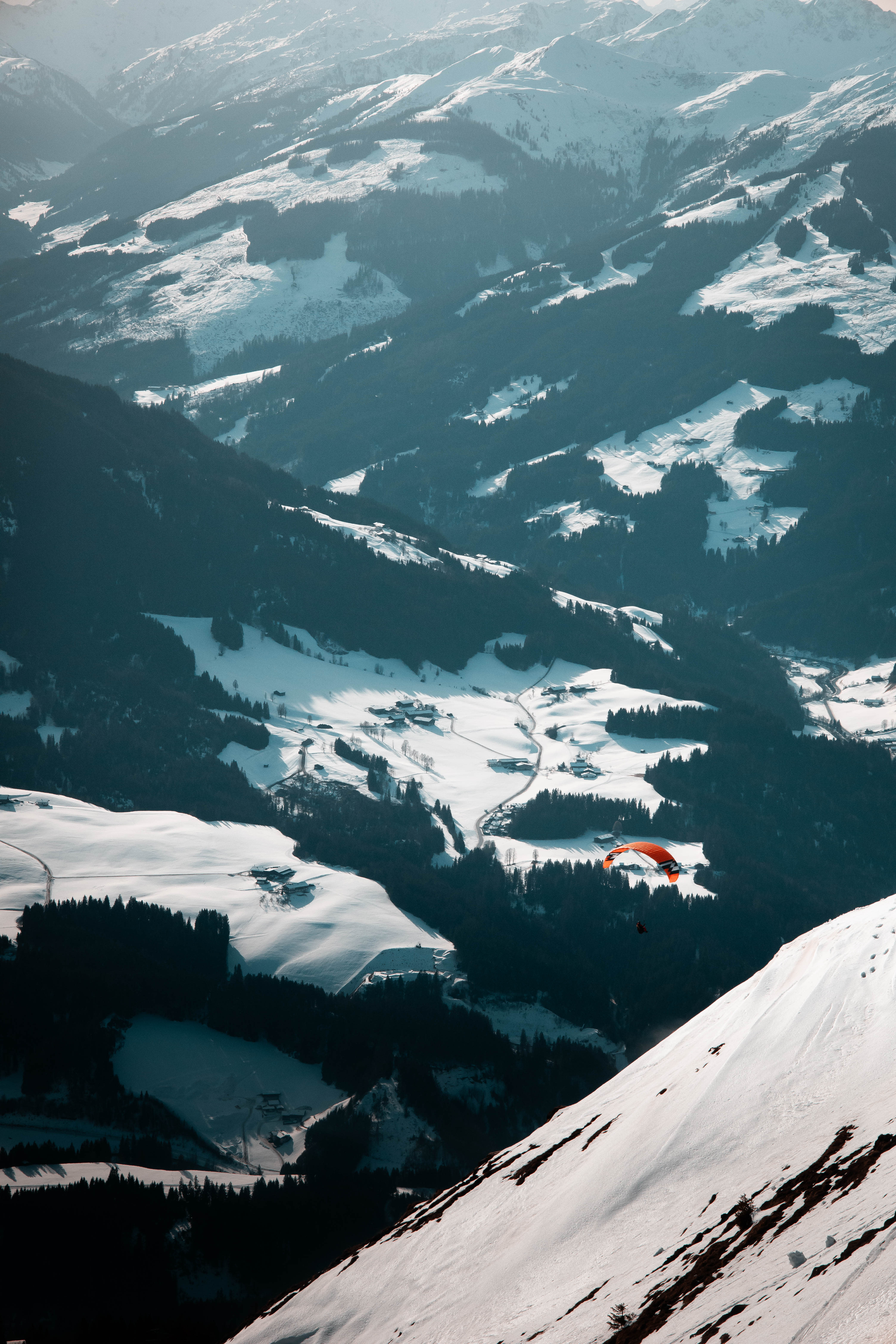
For years, it was a running joke among us — that one day we would ski the Alps. We said it every winter on the slopes of Vigla, the mountain above Kastoria where we studied, where the lifts were slow and the runs were short and the coffee at the top tasted better than it had any right to. We meant it the way young people mean things: completely, and without a plan. Then, somehow, the plan existed. Three of us, five days, the SkiWelt. We arrived with the kind of energy that only old friends carry — the shorthand, the shared history, the ability to be completely comfortable in the cold at six in the morning. It was the second day when it happened. We had been up since dawn, and by midday we had made our way to the summit — to the chalet up there where the air is thin and the world below stops making sense in the best possible way. We were standing outside before lunch, not really talking, just looking. The Alps do that to you. They make conversation feel unnecessary. That's when they appeared. Two paragliders, from nowhere, drifting across the valley below us in absolute silence. Colour against white. The slow, deliberate movement of something that has decided to trust the air completely. I had the camera in my hand already. Some moments give you just enough time.
The Road That Remembers
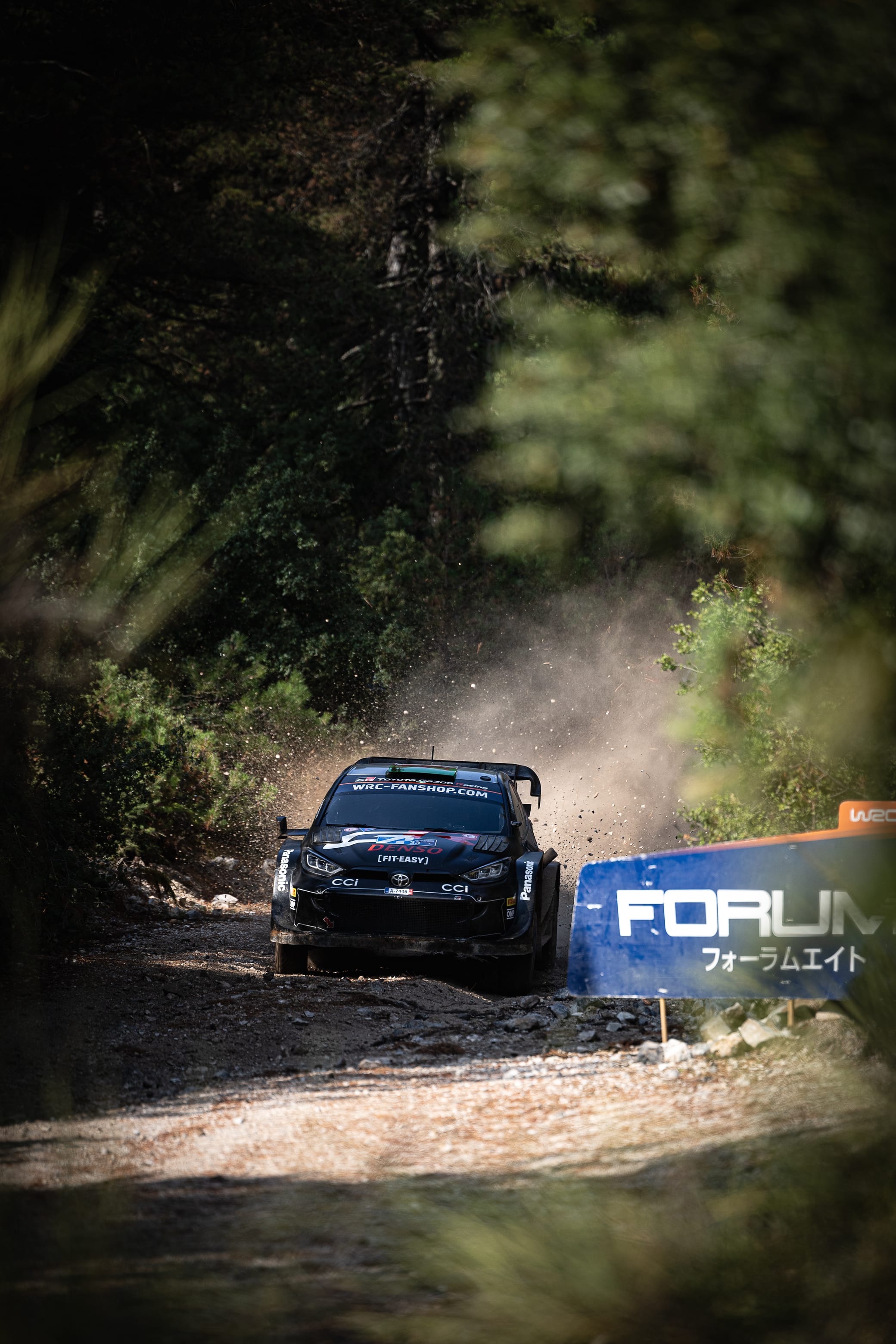
My father used to take me to the village next door — Elateia, my mother's village — where one of the most famous special stages of Rally Acropolis ran through the hillside. Over the years I managed to see all the legends pass through: Colin McRae, Marcus Grönholm, Tommi Mäkinen, Richard Burns and others. I was too young to truly understand what I was watching. But I remember that I loved it — the dust, the heat, the voices and the passion of the crowd as the cars came through. I understood later how much it had marked me, because on the years I couldn't make it, I missed it. Not just the event. The feeling of being there. Later, when photography entered my life, I waited with enormous anticipation for the moment I would photograph a rally car for the first time. It was my first Rally Acropolis with a camera, and I didn't want to miss a single moment. Somehow, a few years later, June 2025 arrived — and with it, this photograph of Elfyn Evans in the Yaris WRC. It was the second day of the EKO Rally Acropolis. We had spent the night in a small hotel in the village of Fourna and woken before sunrise to get inside the stage before it closed — stages close three hours before the first car starts. We found our spot in a vast clearing deep in the forest, full of campervans and tents. Because above all else, a rally is a trip with good company and a common passion. We had a view of a long, sustained downhill right-hander, then a short straight leading into a series of uphill hairpins. As the start time approached, the three pace cars came through — along with Michèle Mouton, a legend of rallying, now part of the WRC organisation. The helicopters swept overhead checking for spectators in dangerous positions. Then the marshal near us called out: "The first car has left." We heard it before we saw it. The sound travels through the whole mountain — angelic and demonic at once, impossibly loud and yet melodic. If you have never stood close to one of these cars, I cannot describe it to you. I shot a few frames from my first position, then moved higher into the forest looking for a different angle on an uphill hairpin. The forest was full of people. I found a spot with a view of the exit of one of the hairpins and asked a kid nearby to film on my phone so I could focus on the camera. He agreed with pleasure. I could hear Evans coming. Then very close. I could hear the marshals' whistles warning the crowd. He was on the hairpin below — their speed through these roads is something else entirely. The next one was mine. I found the focus, tried to frame it right. Then the nose of Evans' Yaris appeared at the corner. I pressed the shutter and held it — twenty-five frames in a single moment. From that point on, the moment was mine. I picked this one. Then I ducked and tried to protect the camera from the stones the car threw up as it passed. Some roads stay with you long before you know how to look at them.This one I had been coming back to since I was a kid.
A Man and His Patience
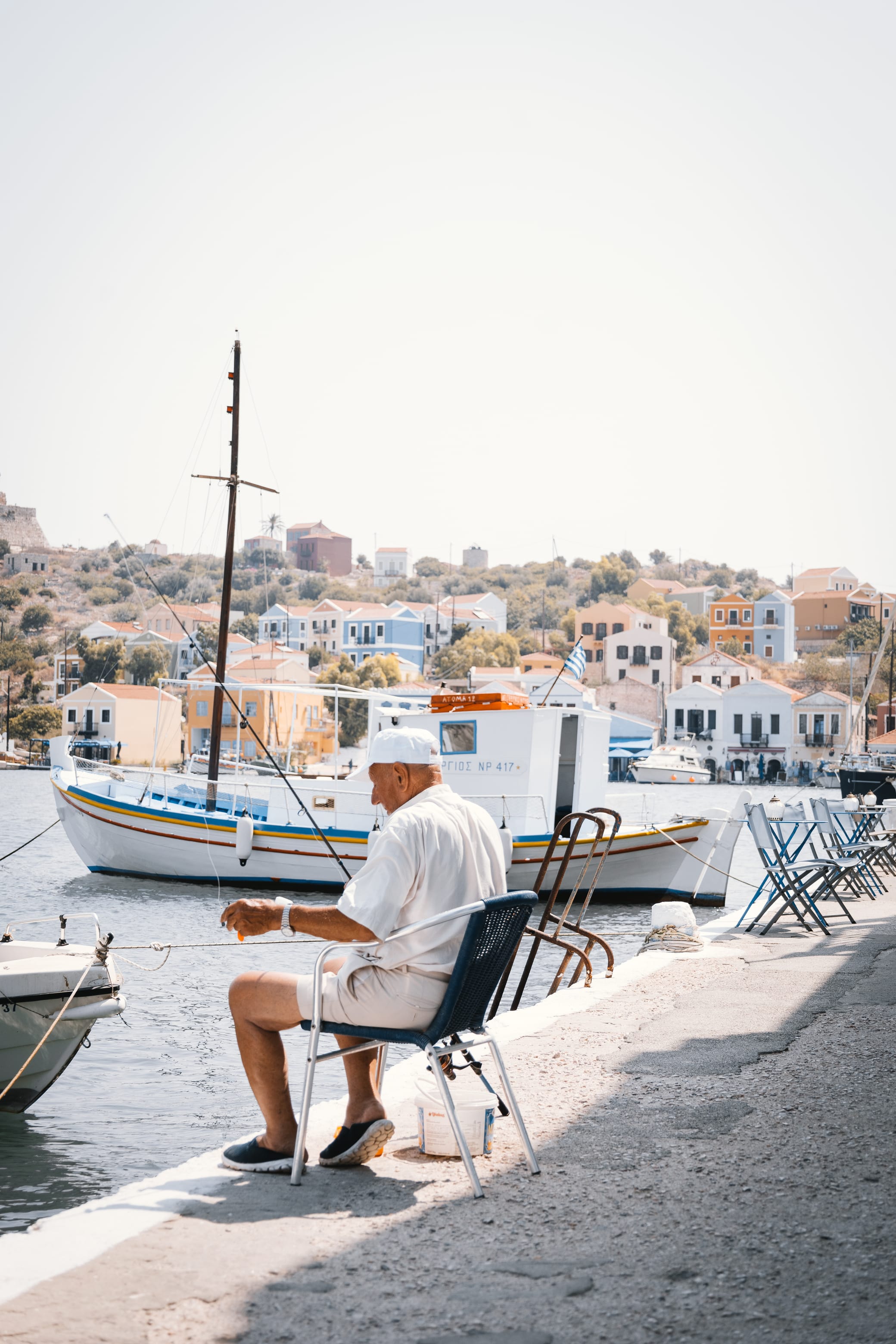
We had woken up late that morning — the kind of late that only happens on islands, when the heat gives you permission. Kastellorizo had that effect. Three hours by ferry from Rhodes, small enough that you learn its rhythms by the second day, quiet enough that you start to hear your own. We had just finished breakfast at the harbour front, coffee still warm in our hands, waiting for the boat that would take us swimming. The kind of waiting that doesn't feel like waiting at all. That's when I saw him. An old man at the edge of the dock, fishing rod in hand, entirely alone and entirely unbothered. The whole harbour was moving around him — tourists, boats, the particular chaos of a summer morning — and he was simply not part of it. Not removed, not distant. Just elsewhere. Present in a way that had nothing to do with the people nearby. I raised the camera before I thought about it. He never looked up. I don't think he noticed me at all. Some people have that quality — they exist so fully in their own moment that the world becomes background. The hook was in the water. The light was perfect. And somewhere behind us, the boat was coming.